
Compare frame finish, mounts, glazing and finished dimensions before choosing a wooden frame for a photographic print.
The frame is the part you see every time you pass the photograph. Its finish, width and proportions should help the work belong in the room. The word handmade is worth explaining, but it is not a substitute for construction details.
Start with the photograph and the room.
Try the frame finish against the photograph’s lighter and darker areas, then against the furniture nearby. A dark frame can make a clear boundary. A lighter wood can soften that boundary. These are visual choices, not rules that bind every coastal view or black-and-white photograph.
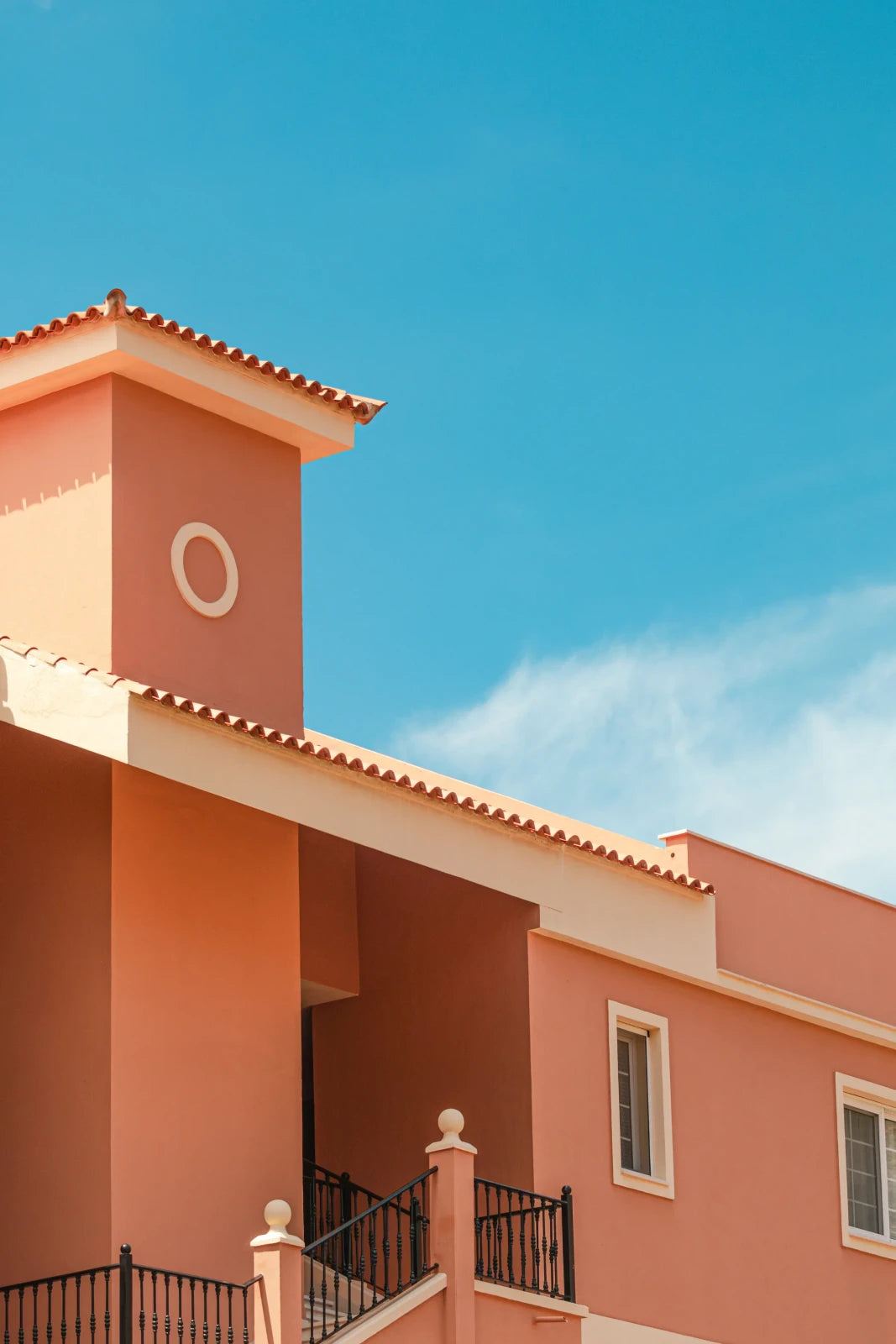
Warm Facade by Jordan Cahill. Compare the frame finish with the warm building, the blue sky and the furniture around the work.
Decide what the mount should do.
A mount gives the image space inside the frame and changes the proportions of the finished work. Check whether the stated print size refers to the image or the paper sheet, and whether the quoted frame size includes the mount.
For preservation framing, the Library of Congress recommends suitable boards and mounting methods, with the photograph separated from the glazing. Ask your maker how the print is supported. Avoid assuming every component is suitable just because the front looks well finished.
Framing reference: Library of Congress matting and framing guidance
Glazing changes the view.
Glass and acrylic options differ in weight, handling and reflection. Ask which is supplied and which coatings or protection claims apply to that exact option. A coating that reduces reflections and one that filters ultraviolet light answer different questions.
Good framing helps protect a print but does not make direct sun or a damp position harmless. Consider what happens in the room throughout the day, not only where the frame looks best for a photograph of the room.
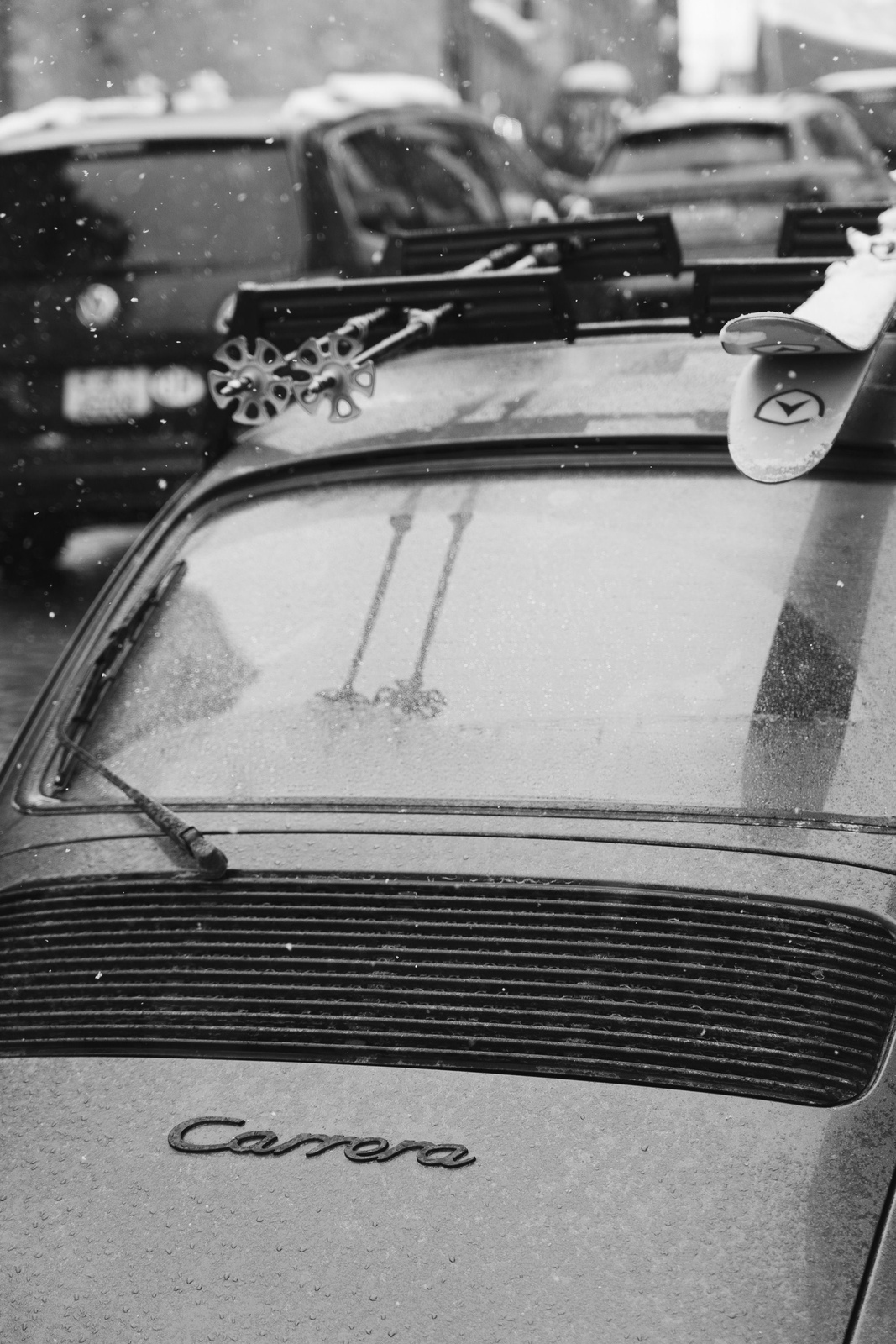
Ski Weekend by David Szabo. Try a dark and a lighter frame against this black-and-white composition, then measure the complete framed object.
Measure the finished frame.

Use the outside dimensions to mark a paper rectangle on the wall. Look at it from the normal viewing position and from the doorway. Check the clearance above furniture and beside switches. Remove the template before choosing the final placement.
The fixing must suit the wall, the hanging hardware and the complete framed weight. Ask the maker or a qualified installer if you are unsure; there is no single hook that is right for every wall.
Questions worth asking.
What is the frame made from? What finish does it have? Which mount and glazing are included? How is the print supported? What are the final dimensions and weight? Is it supplied ready to hang? Clear answers are more useful than a promise of instant gallery status.
For a sequence of frames in a narrow room, read The hallway guide
For the relationship between paper and reflected light, read Matte vs glossy prints
Reviewed on 11 October 2026. Specifications are attributed to the manufacturer; buying advice expresses the house view.
For a step-by-step measuring method, read Choosing a photographic print size
For the material in front of the print, read Choosing glazing for a photograph
Find the work first.
Open a photograph to compare the frame and mount choices currently available.
Explore the collectionsQuestions and answers.
Filed 9 April 2026, under Collecting & craft.