
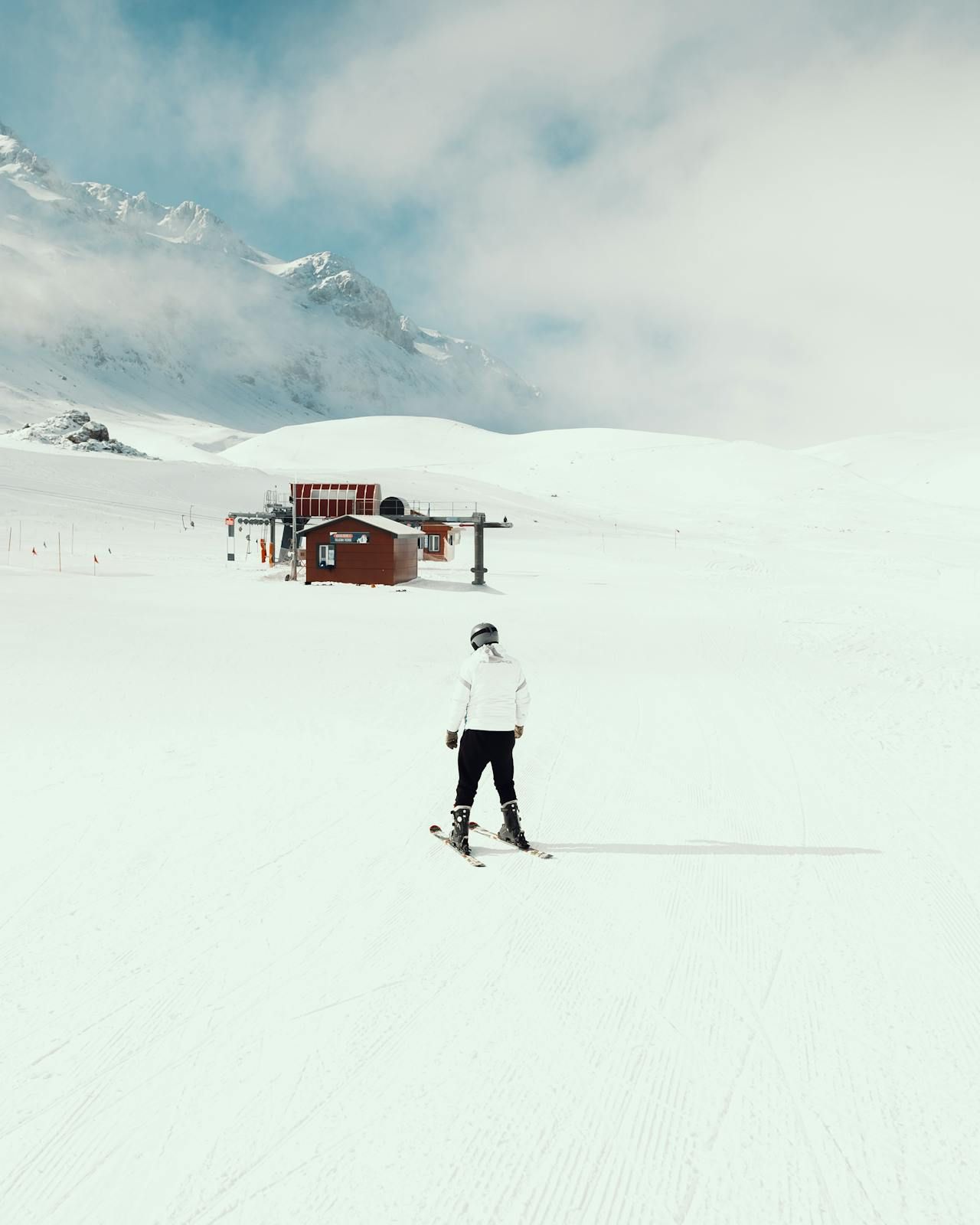
St Moritz
The frozen lake, and the season on it.
An Engadine valley town that, in 1864, invited a group of British holidaymakers up for the winter on a wager, the hotelier Johannes Badrutt promised to refund them if they didn’t enjoy themselves. They did. Modern winter tourism, the Cresta Run, the world’s first electric tram, white-tablecloth dining at altitude, and the social calendar that runs from White Turf in February to the Snow Polo in late January all start here.
- Where
- Alps, Switzerland
- When to go
- Mid-December to early April
- Established
- 1864
St Moritz, in full.
St Moritz is the resort that invented the resort. We file it under Old Money because the modern Alpine winter, chairlifts, valet parking, the dressing room before dinner, is, more or less, an Engadine invention from 1864. The watchmaking is older; the hotels are older; the dress code, embarrassingly, still works.
Where the Alpine winter was invented
In September 1864, the hotelier Johannes Badrutt proposed a wager to a group of British summer guests at his Kulm Hotel: come back in winter and, if you don’t enjoy yourselves, I’ll refund the trip. They came. They did. The Alpine winter season, chairlifts, ski schools, hot baths, white-tablecloth dining, the entire economic apparatus of the modern ski resort, starts there. The town has a habit of being first: Switzerland’s first electric light (Kulm Hotel, 1878), Switzerland’s first electric tram (1893), the world’s first ski lift (Corviglia, 1935), the Cresta Run (1885) and the world’s first bobsled track (1886) just below it. St Moritz is, in a real sense, the cathedral of the Alpine season.
A lake, two villages, three mountains
St Moritz sits at 1,856m on the south-facing slope of the Engadine Valley, around a small natural lake that freezes between December and March. The town is two villages: St Moritz Dorf (the resort, the palaces, Badrutt’s, Carlton, Kulm, the lift to Corviglia) and St Moritz Bad (the spa-water side, where the village originally was, now more residential). The lift system covers three mountains: Corviglia (the immediate, sun-side, restaurant-heavy domain), Corvatsch (the colder, higher, more serious skiing across the valley above Silvaplana) and Diavolezza (the dramatic glacier ski an hour by post-bus toward the Bernina pass). One lift pass covers all three.
Corviglia at 9.30, La Marmite at 1, Polo at 3
The St Moritz day is, by Alpine standards, gentle. The Chantarella funicular leaves the village at 8.45 for the 9.05 Corviglia first-chair. A morning on the south-side bowl. Lunch at La Marmite (the most-photographed mountain restaurant in the Alps; Reto Mathis’s charcoal grill, the truffle plate, the sun terrace) or at Mathis Food Affairs’ El Paradiso (the legendary tagliatelle al limone, the iceberg-pile of caviar, the lakeside view). Sleep through the heat. A 3pm Snow Polo or White Turf event on the frozen lake (when in season). A 6.30pm aperitivo at Badrutt’s Renaissance Bar. Dinner at Da Vittorio (three Michelin stars at Carlton) or Locanda Pizzofranco. Bed at midnight.
A jacket, a tie, a navy reason
St Moritz is the only resort in the Alps that still genuinely enforces a dress code. The Palace Hotel’s Renaissance Bar (Le Restaurant), the Kulm Hotel’s Sunny Bar, and the Suvretta House dining room all require a jacket and tie after 6.30pm, not “smart-casual,” not “elegant,” but a tie. Anything tweed or cashmere works; ski parkas are quietly removed at the door. The watch is older than yours, by design. The trick of an actual St Moritz week is to enjoy the formality, a jacket on a snowy evening, with a glühwein in the bar before dinner, is one of the few atmospheric pleasures the modern Alps have not yet quite refrigerated.
A ski town with a dress code.
A place, accounted for.
- 1864
- the Badrutt wager
- September 1864: hotelier Johannes Badrutt offers his summer guests a refund if they don’t enjoy a winter visit. Modern Alpine tourism starts here.
- 322
- sunny days a year
- The Engadine claim, often repeated, never quite challenged. The valley is south-facing, dry and high.
- 1885
- the Cresta Run is built
- The first skeleton-toboggan track in the world. Still hand-built every December; still men-only on race day.
- 1856
- Kulm Hotel opens
- The hotel where the wager was made. Switzerland’s first electric light installed here in 1878.
- 350
- kilometres of pistes (Engadine)
- Corviglia, Corvatsch, Diavolezza together. Smaller than the French rivals; sun-richer.
Before the first weekend.
What separates the first weekend in a place from the second.
- 01
Get there
Zürich (ZRH) → drive 2h 30m or train via Chur (3h 30m, Bernina Express). Milan → drive 3h or Eurocity via Tirano. Engadin Airport for private jets.
- 02
Reserve
Da Vittorio, La Marmite, El Paradiso, Le Restaurant, by mid-October. White Turf grandstand by November.
- 03
Sleep
St Moritz Dorf for the proper week (Badrutt’s, Kulm, Carlton). St Moritz Bad for the Kempinski. Pontresina or Celerina at half the price; expect a 5-min train.
- 04
Wear
Tweed, cashmere, an old field jacket; jacket and tie after 6.30pm at the canonical bars. Real fur is fading but not banned.
- 05
Eat first
La Marmite lunch (Wednesday); Da Vittorio dinner (Friday); the Suvretta House Sunday brunch (proper jacket); a Sunny Bar bouillon mid-week.
- 06
Watch
Snow Polo (last week of January), White Turf (three Sundays in February), Cresta Run from the Sunny Bar terrace on a Tuesday.
- 07
Drink
Renaissance Bar at 6.30; nightcap at the King’s Club from 11; an afternoon Negroni at the Carlton bar; a tea at the Suvretta House at 4.
- 08
Tip
Cash, in Swiss francs, never euros. CHF 20 for the chasseur; CHF 50 for the maître d’ at Da Vittorio.
What you will actually be doing.
- 01
A White Turf Sunday in February, Thoroughbreds racing across the frozen lake, glühwein in fur-lined mugs, the Engadine Alps cracking opposite.
- 02
A long lunch on the La Marmite terrace at the top of Corviglia, truffle ravioli, a Pinot Nero, the Piz Bernina massif at the wallpaper.
- 03
A 6.30 cocktail at Badrutt’s Renaissance Bar before dinner, in a jacket and tie.
- 04
The Cresta Run as a spectator on a Tuesday morning, the world’s only remaining 19th-century skeleton track, riders launching at 80 km/h, the bar at the top.
- 05
A morning at the Bernina Pass on Diavolezza glacier, the most dramatic glacier ski in Europe, an hour from the village by post-bus.
- 06
A walk on the frozen lake at 7am, before the Snow Polo line goes up.
The year here, month by month.
Dec
The 22 Dec to 5 Jan window is the carnival. Badrutt’s, Carlton, Kulm at full tilt; the lake event programme starts.
Jan
The Snow Polo (last week of January) is the major event. The first three weeks are the locals’ window, fewer crowds, deep cold.
Feb
Three Sundays of horse-races on the frozen lake. The most photogenic Alpine month; book in October.
Mar
The first three weeks of March is the canonical Engadine, sun-warmed pistes, kinder rates, the Engadin Skimarathon (early March), restaurants reservable.
Apr
Lifts close early April. Slush ski for one week; the lake melts mid-April. The valley shuts to its summer rhythm.
Jul-Aug
The cross-country trails turn green; the Engadin Festival classical concerts run; lake swimming, road cycling, walking. A genuinely good summer alternative.
Sep-Nov
The village is mostly closed. The hotels begin to reopen in late November; Christmas markets in mid-December.
The villages, and which is which.
- 01
St Moritz Dorf
The resort heart, Badrutt’s, Kulm, Carlton, the Corviglia funicular.
Sleep here for the proper week. The lakefront promenade, the church, the high-fashion shops, the Palace tower as the photograph.
- 02
St Moritz Bad
The original village, spa-water side, more residential, quieter.
A 25-minute walk or a 6-minute Engadin bus from Dorf. The Kempinski is here; cheaper, calmer, less Palace-side glamour.
- 03
Sils Maria
The Nietzsche-and-cross-country village fifteen minutes south.
Two lakes, a 19th-century philosopher’s house, the most-photographed cross-country ski trail in the Engadine.
- 04
Pontresina
The neighbouring village, quieter, family-friendly, ski-touring base.
Five minutes by post-bus or train. Hotel Saratz; the Schlosshotel; a slower week at half the price.
- 05
Silvaplana
The Corvatsch village, the colder, higher, more serious skiing.
Eight minutes by bus. The Corvatsch lift goes to 3303m; the longest, blackest pistes in the area.
- 06
Celerina
The Cresta Run village, between St Moritz Dorf and Pontresina.
The original 1880s skeleton-bobsled run goes through here. The Saturday market is small, real, and worth a half-hour.
Where to eat, drink and sleep.
Eat
- Da Vittorio St Moritz (Carlton)St Moritz Dorf
Three Michelin stars in the Carlton. Italian by way of the Cerea family from Bergamo. The serious Italian dinner of the Alps; reserve four months out, in cashmere and a jacket.
- La Marmite (Corviglia)Corviglia
The Reto Mathis institutional mountain restaurant at 2486m. Truffle pasta, charcoal grill, the most-photographed terrace in the Alps. Reserve at 9am, lunch at 1.30, sun until 4.
- El ParadisoCorviglia
The lakeside-view sister restaurant, run by the Mathis family. The legendary tagliatelle al limone, the iceberg-pile of caviar, the long-lunch tradition since 1959.
- Locanda PizzofrancoSt Moritz Dorf
A small modern Italian-Engadine hybrid. The dinner before the Cresta Run hospitality at the Sunny Bar. Reserve.
- Le Restaurant (Badrutt’s Palace)St Moritz Dorf
The 1896 Renaissance dining room of Badrutt’s. White tablecloths, a Burgundy cellar; the absolute traditional St Moritz dinner. Jacket and tie required.
- Suvretta Stube (Suvretta House)Above Bad
A 1912 grand-hotel dining room above the village. Heavier on tradition than even Badrutt’s, three generations of the same Bavarian family hosts; the Bernese cattle are the photograph.
- Mathis Food Affairs at SalastrainsCorviglia
A second Mathis family operation at the foot of Piz Nair. Lunch on the deck, a fondue inside, a 4pm chocolate dessert.
Drink
- Renaissance Bar (Badrutt’s)St Moritz Dorf
The 1896 wood-panelled Palace bar. A jacket required after 6.30pm. The proper St Moritz aperitif. Negronis, single-malts, an old-money piano at eight.
- Sunny Bar (Kulm)St Moritz Dorf
The Cresta Run’s post-race bar. Photographs of every winning rider since 1885 on the wall. Tuesday lunchtimes are the Cresta crowd; the rest of the week, quieter.
Stay
- Badrutt’s Palace HotelSt Moritz Dorf
The 1896 stone-and-tower flagship. 155 rooms, the Renaissance Bar, the Le Restaurant, the King’s Club. The first call.
- Kulm Hotel St. MoritzSt Moritz Dorf
The 1856 hotel where the bet was made. The Sunny Bar, the Cresta hospitality, the lake-facing rooms. A lower-key Palace alternative.
- Suvretta HouseAbove Bad
The 1912 grand chalet above the village. 180 rooms, an immense indoor-outdoor pool, the most family-friendly of the palaces.
- Carlton HotelSt Moritz Dorf
A 1913 lakefront grand hotel. Da Vittorio downstairs (three stars). Sixty rooms, all suite-or-larger, all lake-facing.
- Kempinski Grand des BainsSt Moritz Bad
A modern five-star with the original spa-water source piped to the spa. Less old-money, more design-led; the cheaper of the canonical hotels.
- Hotel HauserSt Moritz Dorf
A small family-run three-star in the village heart. The cheapest proper sleep in St Moritz Dorf; an excellent confiserie downstairs.
See
- Cresta RunSt Moritz Dorf
The 1885 skeleton-bobsled track, still hand-built every winter. Open to spectators Tue-Sun; men-only members ride. The St Moritz tradition the village is least likely to retire.
- Olympic Bobsled RunCelerina
The world’s only remaining natural-ice bobsled run. Public passenger rides bookable through the village tourism office; €280 a passenger.
- Corviglia funicularSt Moritz Dorf
The 1928 funicular from the village to Chantarella, then on to Corviglia. Eleven minutes; the right approach to the south-side day.
- White TurfSt Moritz lake
The three-Sunday horse-race-on-ice carnival in February. Skikjöring, flat racing, glühwein. The most photographed event of the Alpine winter.
- Snow Polo World CupSt Moritz lake
The last week of January. Four teams, three days, the most decorated lakeside grandstand in the sport.
- Diavolezza glacier skiBernina pass
A 30-minute post-bus from St Moritz. The longest glacier-piste in the Alps; the Persgletscher run is 10km point-to-point. A serious skiing day-trip.
Dance
- King’s Club (Badrutt’s Palace)St Moritz Dorf
Switzerland’s most discreet nightclub. Underground, dark, the late-evening side of the Palace. Membership-leaning; the Friday night is the canonical one.
- Dracula ClubSt Moritz Dorf
Gunter Sachs’s 1974 social club, members-only by tradition but visitors-welcome via hotel concierge. The most theatrical late hour in the Alps.
Every way in, compared.
| Route | Time | From | Line | Verdict |
|---|---|---|---|---|
| Drive from Zürich | 2h 30m | CHF 80 fuel | Zürich (ZRH) → A3 → Chur → Julier Pass → St Moritz | The Julier pass closes in heavy snow; the longer Bernina pass route stays open. Hire a 4WD; chains required by Swiss law on alpine passes. |
| Train from Zürich | 3h 30m | CHF 90 | Zürich HB → Chur → Bernina Express → St Moritz | The Bernina Express from Chur is a UNESCO-listed mountain railway. Reserve a panoramic seat. The right scenic arrival. |
| Helicopter from Zürich | 35m | CHF 5,000 (group) | Zürich (ZRH) → Engadin Airport (Samedan) | Lands at Samedan, ten minutes from St Moritz. A theatrical Saturday option; clear weather only. |
| Eurocity from Milan | 4h | €55-€80 | Milano Centrale → Tirano → Bernina Express → St Moritz | The Italian-side approach to the Engadine. The connection at Tirano is the most photogenic train change in Europe. |
| Private jet to Samedan | Minutes | It depends | Anywhere → Engadin Airport (LSZS) | The highest commercial airport in Europe at 1707m; private and small commercial only. |
The rules the regulars keep.
- 01
Jacket and tie after six
Badrutt’s Renaissance Bar, the Kulm’s Sunny Bar, the Suvretta dining room, non-negotiable. Tweed or cashmere; the village’s tailor (Hauser) hires.
- 02
Sleep in Dorf, lunch in Corviglia
The village heart hotels (Badrutt’s, Kulm, Carlton) put the lift, the lake, and the dinner at your door.
- 03
Reserve in October
Da Vittorio, La Marmite, El Paradiso, the Suvretta dining room, books open by mid-October. White Turf and Snow Polo grandstand seats by November.
- 04
A White Turf or Snow Polo Sunday
Time the trip around at least one. The lake-on-ice carnivals are the most theatrical hours in the Alpine winter.
- 05
Tip in Swiss francs, never euros
Tipping is light by Italian/French standards but cash and currency-correct. €20 for the chasseur is mildly insulting; CHF 20 is right.
A short, polite list.
- 01
Don’t expect the skiing scale of the Three Valleys. The Engadine has 350 kilometres of pistes, not 600, the village is the bigger draw.
- 02
Don’t skip Diavolezza on a clear day. The Bernina-pass glacier ski is a different mountain; the post-bus runs every twenty minutes.
- 03
Don’t turn up to Badrutt’s for dinner without a tie. Even with a reservation, the maître d’ will quietly send you to your room.
- 04
Don’t order a beer in the Sunny Bar at lunchtime. A glühwein, a bouillon, a glass of Pinot Nero, that’s the order. Beer is for après in Dorf.
- 05
Don’t book the cheapest "Engadin" package without checking the village. Some "St Moritz" packages put you in Pontresina or Samedan, fifteen minutes by post-bus.
Practical, briefly.
When is the best time to ski St Moritz?
The first three weeks of March are the canonical St Moritz week, long sun-warm days, fast snow on the high pistes, kinder rates, every restaurant reservable. February for the carnival (Snow Polo last week of January, White Turf three Sundays in February). January (between New Year and February half-term) is the locals’ window.
How do I get to St Moritz from Zürich or Milan?
From Zürich (ZRH): 2h 30m by car, or 3h 30m by train via Chur (the Bernina Express continues from Chur to St Moritz, and is one of the world’s most photographed train routes). From Milan: 3h by car, or 4h by Eurocity train via Tirano. Helicopter (Helvetic, Swiss): 35 minutes, CHF 5,000 a group. Engadin Airport (Samedan) takes private jets, ten minutes from the village.
Where should I stay in St Moritz?
Splurge: Badrutt’s Palace (the photograph), Kulm Hotel (the original), Suvretta House (the family-friendly grand). Carlton (lakefront, all-suite, Da Vittorio downstairs). Modest: Kempinski Grand des Bains in Bad, Hotel Schweizerhof in Dorf, Hotel Hauser as the village three-star. Avoid the village edges and the Pontresina-substitute "St Moritz" packages.
Is the dress code real?
Yes, at Badrutt’s, the Suvretta House, and the Kulm formal dining room, after 6.30pm, a jacket is required and a tie strongly recommended. Outside those hotels, the village is more relaxed but still smart-casual at minimum. Pack a navy blazer; rent a tie at Hauser if you forgot.
Is St Moritz worth it for a non-skier?
Particularly. The lakeside Snow Polo and White Turf events, the Cresta Run as a spectator, the cross-country ski networks (Engadin Skimarathon in March is the biggest ski-marathon in Europe), the Bernina Express, the Pontresina church concerts, the spa floors at Badrutt’s and the Kempinski, a non-skier’s week works better in St Moritz than in any other Alpine resort.
How does St Moritz compare to Courchevel or Megève?
St Moritz is the senior, older, more formal, smaller skiing area, larger social calendar, drier and sunnier than the French Alps. Courchevel is the larger and more decorated; Megève the prettier and more rural. For tradition and the dress code, St Moritz; for skiing scale, Courchevel; for village life, Megève. A serious Alpine winter does all three across two seasons.